

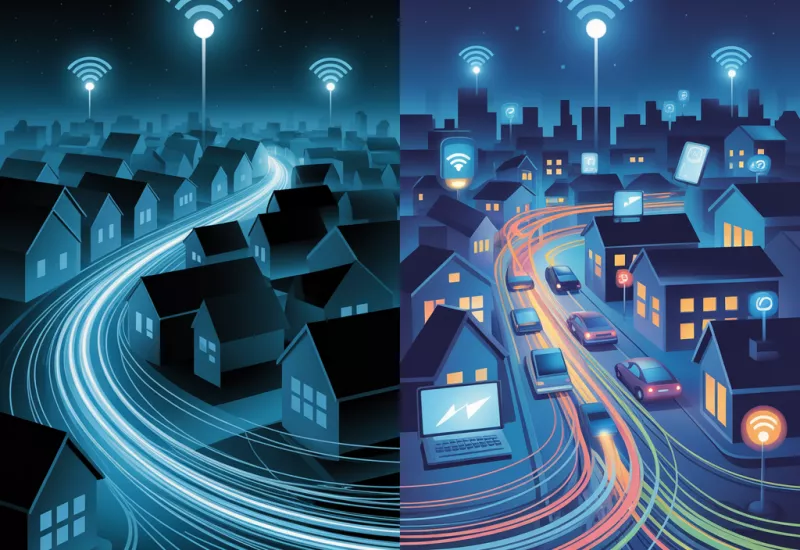
Ever noticed that your internet feels super fast late at night, but suddenly slows down in the evening?
You are not imagining it. There is a simple reason for this: internet traffic has rush hour — just like roads do.
The Internet Has Peak Hours
Most people use the internet at the same time of day.
Between 6pm and 10pm, millions of people are:
Streaming Netflix and YouTube
Scrolling TikTok and Instagram
Gaming online
Downloading updates
Video calling family and friends
This creates what network engineers call peak traffic hours.
Just like cars on a highway, the more people using the network at the same time, the busier it becomes.
Why It Feels Faster Late at Night
At 2am, most people are asleep.
That means far fewer devices are using the network, so the available bandwidth is shared between fewer users. With less traffic, everything loads faster.
It is the same reason why roads are empty in the middle of the night but congested during rush hour.
Streaming Uses Huge Amounts of Data
Streaming video is one of the biggest reasons for evening slowdowns.
For example:
Standard definition streaming can use about 1 GB per hour
HD streaming can use 3 GB per hour or more
4K streaming can use 7 GB per hour or more
When thousands of households start streaming at the same time, it places heavy demand on internet infrastructure.
Modern Networks Are Built to Handle It
Good internet networks are designed to manage these peak hours.
Providers constantly monitor usage and expand capacity as demand grows. By adding additional wireless links, upgrading equipment, and improving network routing, providers can handle more users while keeping connections stable.
Why Community Networks Matter
As more people rely on the internet for work, education, entertainment, and communication, reliable connectivity becomes increasingly important.
Networks like INKOSI CONNECT are built to serve communities by delivering stable, high-speed connectivity while continuously expanding capacity as demand increases.
Because today, the internet is not a luxury — it is part of everyday life.